Coral Restoration Internships in Indonesia: How to Choose a Program | Blue Corner Conservation
How to Choose a Coral Restoration Training or Internship in Indonesia
Written by Andrew Taylor, Restoration Ecologist and Director, Blue Corner Conservation
Indonesia is home to some of the most diverse coral reefs in the world and a growing number of coral restoration projects. For students, divers and early-career marine conservationists, this creates opportunities to gain practical experience in coral restoration while contributing to active projects.
But not all coral restoration programs are the same.
Some are designed primarily as short volunteer experiences, while others focus on technical training, scientific monitoring or longer-term internships. Before choosing a program, it is worth looking beyond how many corals you will plant and asking what you will actually learn, how the restoration project is managed, and how its success is measured.
1. Look for a long-term restoration project
Coral restoration is not simply a matter of attaching coral fragments to a reef.
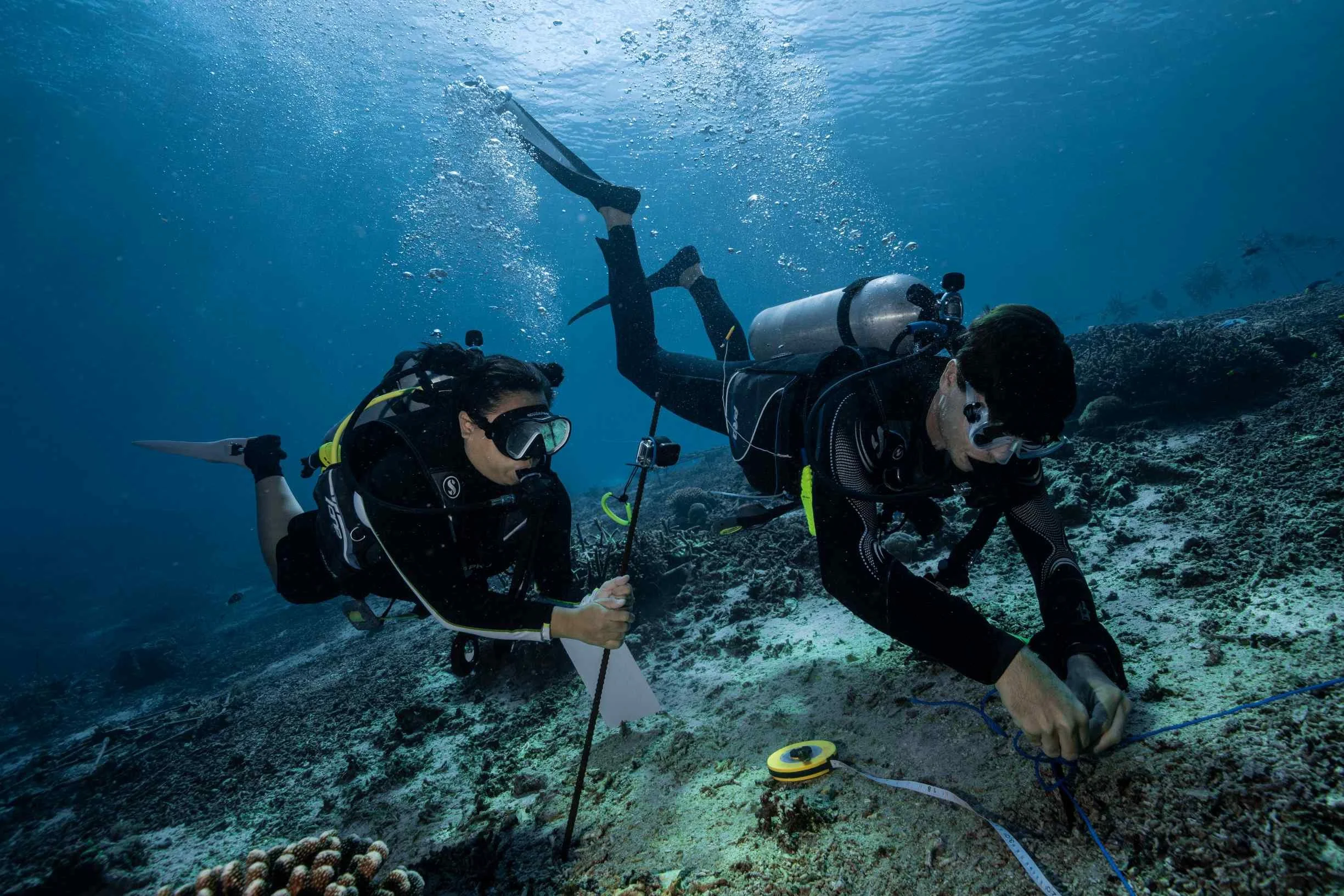
Restoration projects should begin by understanding why a reef has degraded and whether the conditions that caused that degradation have been addressed. Once restoration begins, transplanted corals and restoration structures require maintenance and monitoring over months and years.
When comparing programs, ask:
How long has the restoration project been operating?
Is the restoration site monitored over time?
What happens to transplanted corals after participants leave?
Does the project measure changes in the wider reef ecosystem?
Are unsuccessful techniques changed based on monitoring results?
A program attached to a long-term restoration project can provide a very different learning experience from a one-off coral planting activity.
2. Restoration training should include reef ecology
It is difficult to understand coral restoration without first understanding how coral reefs function.
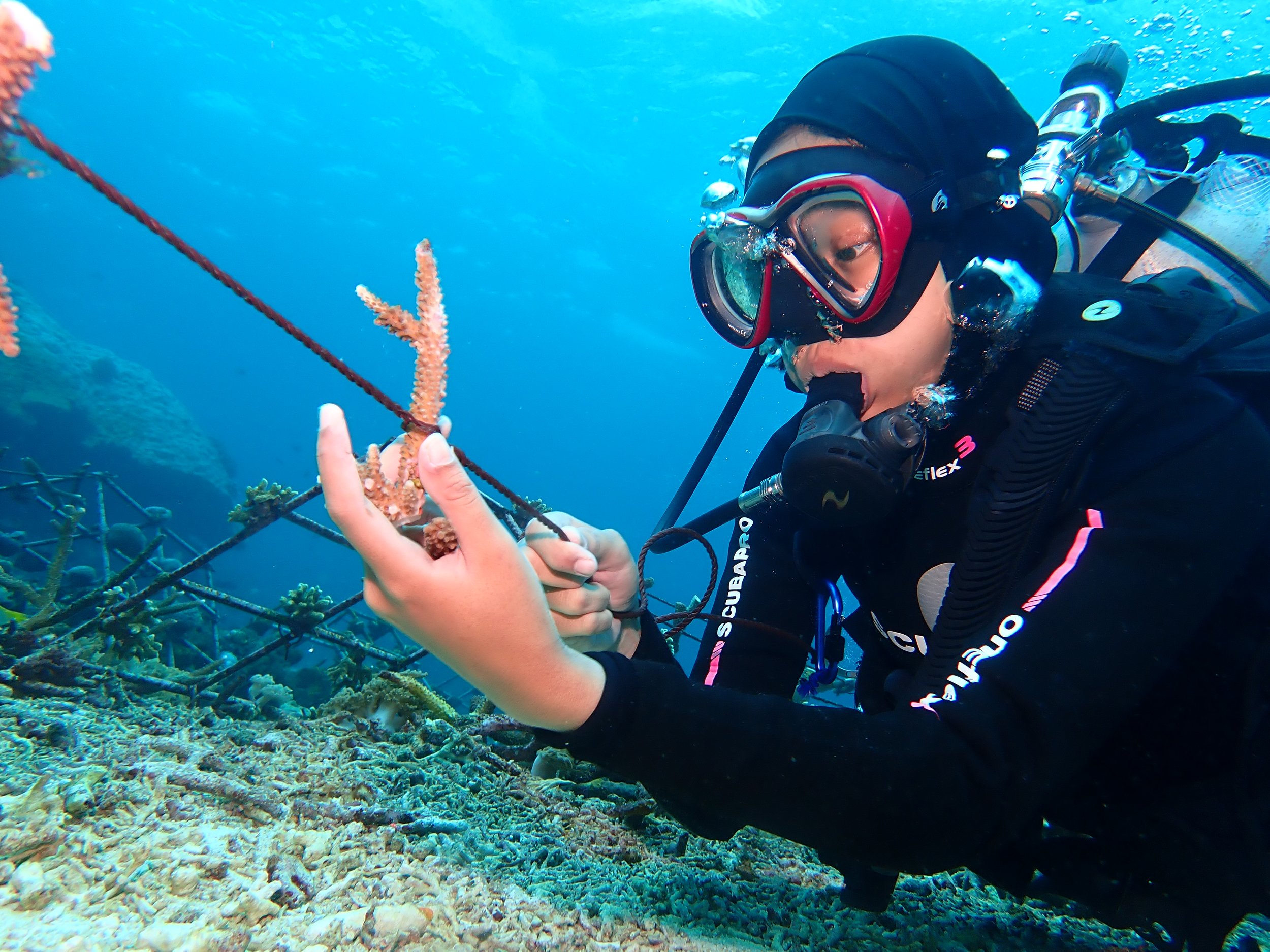
A good training program should therefore cover more than coral propagation techniques. Participants should develop an understanding of coral biology, reef ecology, coral identification, reef degradation and the ecological processes that influence whether restoration succeeds.
This is particularly important in Indonesia, where reefs can differ considerably between locations in coral communities, environmental conditions and sources of disturbance.
The objective should not simply be to learn how to transplant a coral, but to understand when, where and why restoration may be appropriate.
3. Ask how the project measures success
This is one of the most important questions to ask any coral restoration program.
Counting the number of corals transplanted or structures installed tells you how much restoration activity has occurred. It does not necessarily tell you whether the reef is recovering.
A scientifically grounded project should monitor ecological outcomes.
Depending on the objectives of the project, monitoring might include:
survival and growth of transplanted corals;
coral cover and community composition;
coral recruitment;
coral health and partial mortality;
fish abundance and diversity;
reef-associated invertebrates;
habitat complexity; and
comparison with unrestored or healthy reef areas.
For students interested in marine biology or conservation careers, learning how restoration outcomes are monitored can be just as valuable as learning restoration techniques themselves.

4. Look for comparison with healthy and degraded reefs
Restoration sites do not exist in isolation.
One of the best ways to understand whether a restored reef is recovering is to compare it with other reef conditions. This can include degraded reefs where restoration has not occurred as well as nearby healthy reef communities.
Programs that expose students to several reef states can help participants understand what ecological recovery actually looks like.
Instead of simply asking:
“Are the transplanted corals alive?”
a more useful question becomes:
“Is the restored area beginning to function more like a healthy reef?”
That distinction is increasingly important in modern ecological restoration.
5. Consider whether you will learn monitoring methods
For students hoping to work in marine conservation, monitoring skills are highly transferable.
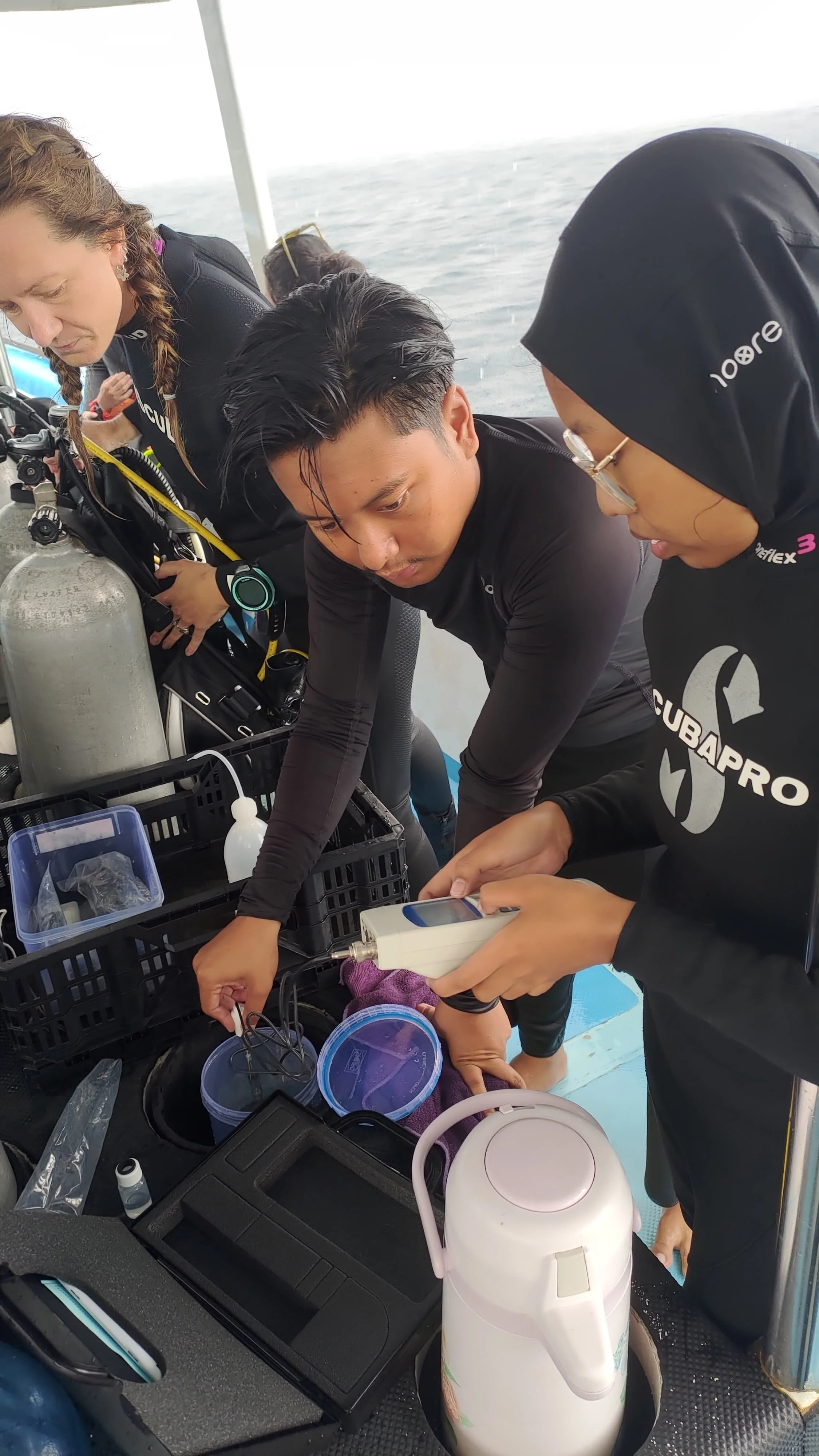
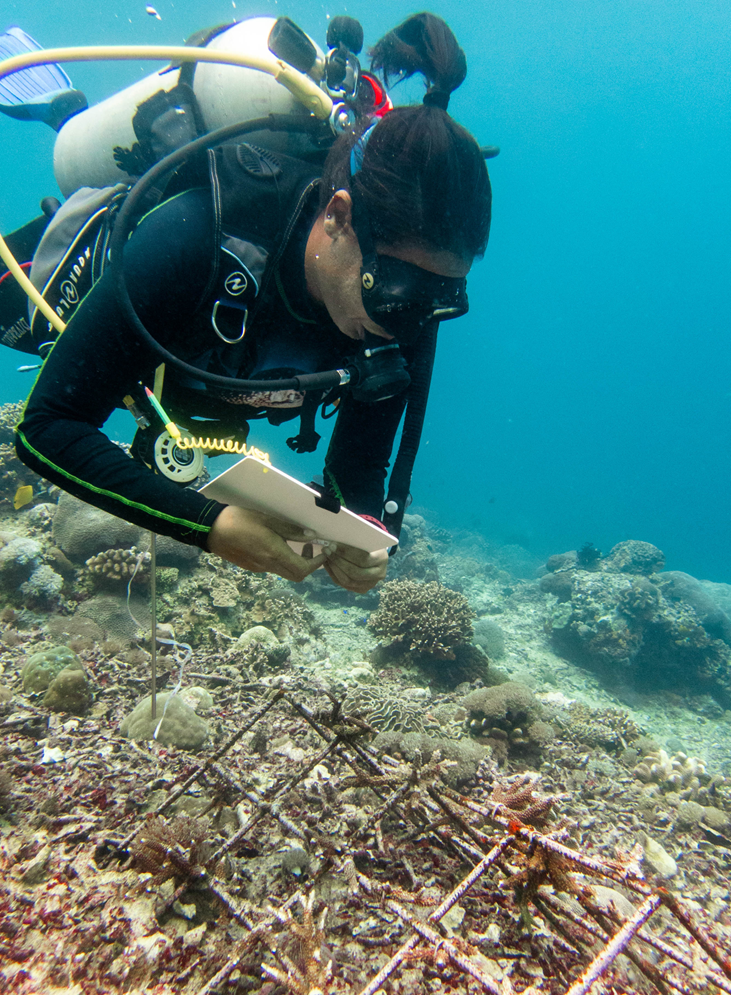
Useful experience can include underwater transects, quadrats, coral health surveys, fish and invertebrate surveys, photo monitoring, data recording and standardized reef-monitoring protocols.
Learning these techniques provides experience that can be applied to marine research, environmental monitoring, protected-area management and other conservation projects.
Programs connected with established monitoring methodologies can be particularly useful because participants learn techniques that extend beyond a single restoration project.

6. Find out who provides the training
Coral restoration is a rapidly developing field. Training should ideally be delivered by people with practical experience designing, implementing and monitoring restoration projects.
Look at the backgrounds of the people running the program.
Are they marine biologists, restoration practitioners or experienced conservation professionals? Is the project connected with research institutions, conservation organizations or regional restoration networks? Does the team actively monitor and evaluate its own work?
Good instructors should also be willing to discuss failures.
Restoration rarely works perfectly. Understanding why corals die, why particular techniques fail or why a site does not recover as expected is an important part of learning restoration.
7. Be cautious of programs focused primarily on coral planting
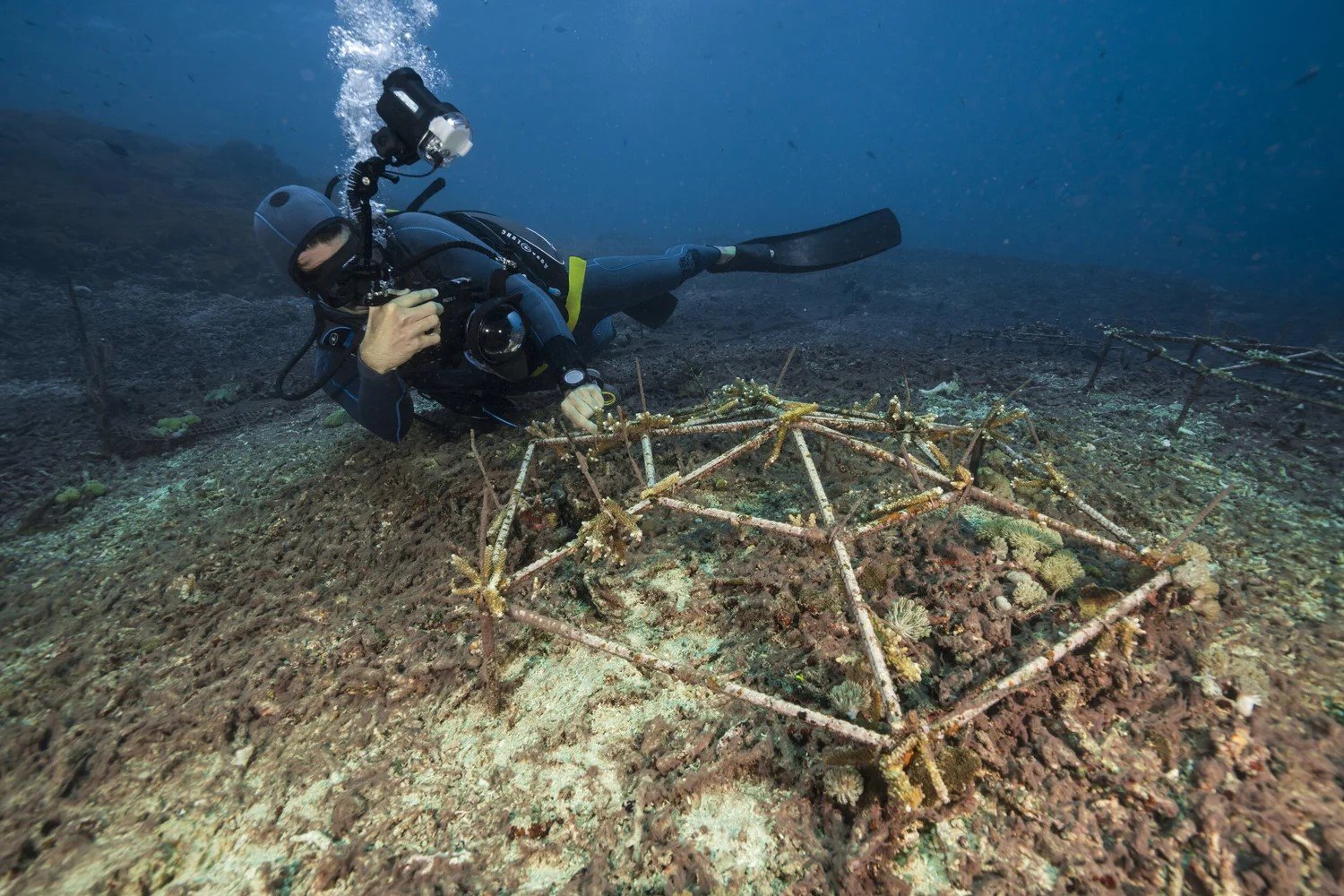
Planting coral is visually appealing and can be an effective component of reef restoration. But coral transplantation alone should not automatically be considered successful ecosystem restoration.
Before joining a program, ask what happens beyond the planting activity.
Does the project conduct maintenance? Are corals revisited? Is survival measured? Are ecological changes documented? Is monitoring used to change restoration practices?
A credible program should be able to explain both what it does and how it knows whether those actions are working.
8. Choose the right program for your goals
Different participants need different types of programs.
Recreational divers
A short introductory program can provide an opportunity to learn the basic principles of coral restoration and participate in an active project.
University students
A multi-week internship that combines reef ecology, monitoring and restoration may provide more useful field experience.
Early-career marine biologists
Look for programs emphasizing ecological monitoring, data collection, experimental design and exposure to active research.
Dive professionals
Programs combining professional dive training with marine conservation can provide a pathway toward scientific diving, conservation instruction or work with marine research organizations.
Restoration practitioners
More advanced workshops should focus on project planning, restoration objectives, monitoring design and evaluating ecological outcomes rather than simply teaching transplantation techniques.
The best program therefore depends on what you want to be able to do when you finish.
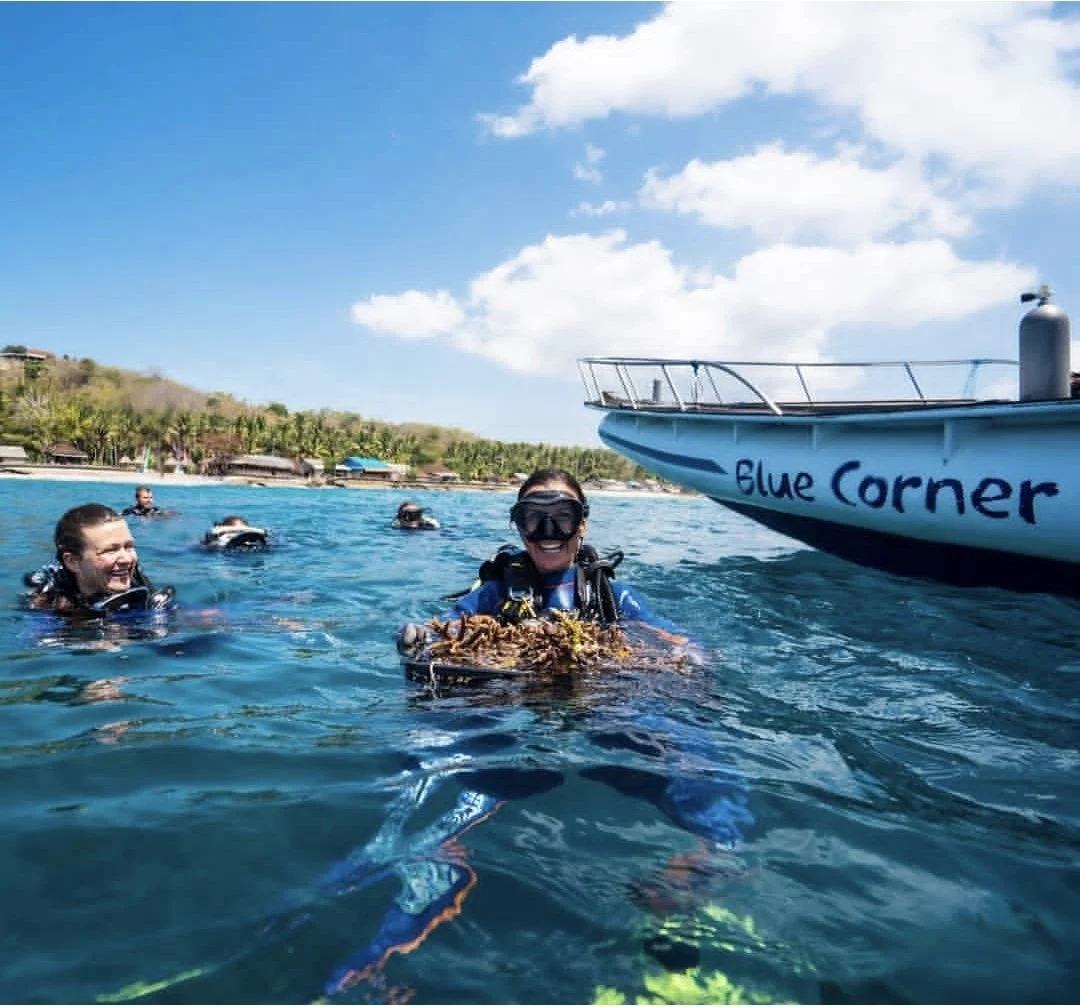
Coral Restoration Training with Blue Corner Conservation
Blue Corner Conservation operates a long-term coral reef restoration and monitoring program within the Nusa Penida Marine Protected Area in Bali, Indonesia.
Restoration work began in 2018 on areas of degraded reef dominated by unstable coral rubble. Since then, the project has combined physical reef rehabilitation, coral transplantation, ongoing maintenance and ecological monitoring to examine how restored areas change through time.
The project also serves as a field training site for Blue Corner Marine Research programs.
Rather than treating coral restoration as an isolated coral-planting activity, our training programs are structured around three connected components:
Coral Reef Ecology → Reef Monitoring → Coral Restoration
Participants can join individual training modules or combine them as part of a longer marine conservation internship.
Coral Reef Ecology
Participants develop the ecological background needed to understand reef degradation and restoration, including coral biology, coral identification, reef fish and invertebrate ecology, and threats to coral reef ecosystems.
Reef Health Monitoring
Participants learn underwater survey techniques and take part in monitoring reefs around Nusa Lembongan and Nusa Penida, including surveys associated with our restoration sites and neighbouring reef communities.
This allows students to see the differences between degraded, restored and healthier reef systems rather than viewing restoration sites in isolation.
Coral Restoration
The coral restoration training focuses on the practical and ecological considerations involved in planning and implementing restoration.
Participants work alongside our restoration team and gain practical experience with the techniques used within our ongoing Nusa Penida project.
Most importantly, the objective is not simply to teach participants how to plant coral.
We want students to understand how restoration projects can establish clear ecological objectives, select appropriate interventions, monitor outcomes and determine whether a reef is actually recovering.
Questions to ask before choosing a coral restoration program
Before committing to a restoration internship or training course anywhere in Indonesia, consider asking the organization:
How long has the restoration project been operating?
What ecological problem is the project trying to address?
How are restoration sites selected?
What happens to transplanted corals after volunteers leave?
How frequently is the site monitored?
What indicators are used to measure success?
Are restored reefs compared with degraded or healthy reefs?
Who conducts the training and what is their restoration experience?
Will I learn ecological monitoring as well as coral transplantation?
How is monitoring information used to improve the restoration project?
A good restoration organization should be able to answer these questions clearly.
Learning restoration, not just planting coral
Coral restoration is becoming an increasingly important tool for reef management, but restoration alone cannot solve the broader pressures affecting coral reefs.
Well-designed projects can nevertheless help rehabilitate degraded reef areas, test new approaches and provide valuable opportunities for scientific research and training.
For people entering the field, the most useful experience is therefore not necessarily the program where you plant the most corals.
Look for a program where you can understand the reef, learn how to measure ecological change, participate in long-term restoration work and critically evaluate whether restoration is actually achieving its objectives.
That is the difference between participating in a coral planting activity and learning how to become a coral restoration practitioner.
Interested in training with us?
Explore Blue Corner Conservation's Coral Restoration Training, Reef Health Monitoring and Marine Conservation Internship programs in Nusa Lembongan and Nusa Penida, Bali, Indonesia.
Frequently Asked Questions about Coral Restoration Internships in Indonesia
Do I need to be a scuba diver to join a coral restoration internship?
Most underwater coral restoration programs require participants to be certified scuba divers. Requirements vary depending on the site and type of work. Blue Corner Conservation's scientific internship programs require participants to be Advanced certified divers with good buoyancy skills and experience diving in currents.
What do you learn during a coral restoration internship?
A comprehensive coral restoration internship should include more than coral transplantation. Training may cover coral reef ecology, coral identification, causes of reef degradation, restoration planning, site assessment, coral propagation, reef monitoring and evaluating restoration outcomes.
How long should a coral restoration internship be?
This depends on your objective. Short courses can introduce restoration techniques, while multi-week internships provide more time to develop skills in reef ecology, monitoring and restoration. Students seeking professional or academic experience should generally look for programs that combine practical restoration with ecological monitoring.
Where can I learn coral restoration in Indonesia?
Coral restoration projects operate in several regions of Indonesia. When choosing a location, consider not only the destination but also the duration of the project, the experience of the team, the monitoring program and whether participants receive structured training. Blue Corner Conservation conducts coral restoration training and scientific internships from Nusa Lembongan, with field activities in the Nusa Penida Marine Protected Area in Bali.
How can I tell if a coral restoration program is scientifically credible?
Ask how long the project has operated, what its restoration objectives are, how sites were selected, what happens to transplanted corals after installation and how ecological outcomes are monitored. Credible programs should be able to explain how they evaluate success rather than relying only on the number of corals planted.