Why Mangrove Reef in Nusa Lembongan is so alive: the science of a drift dive
The same current that carries you along the reef is what feeds it. Here is what our current meter shows, and why the damselfish are always facing into it.
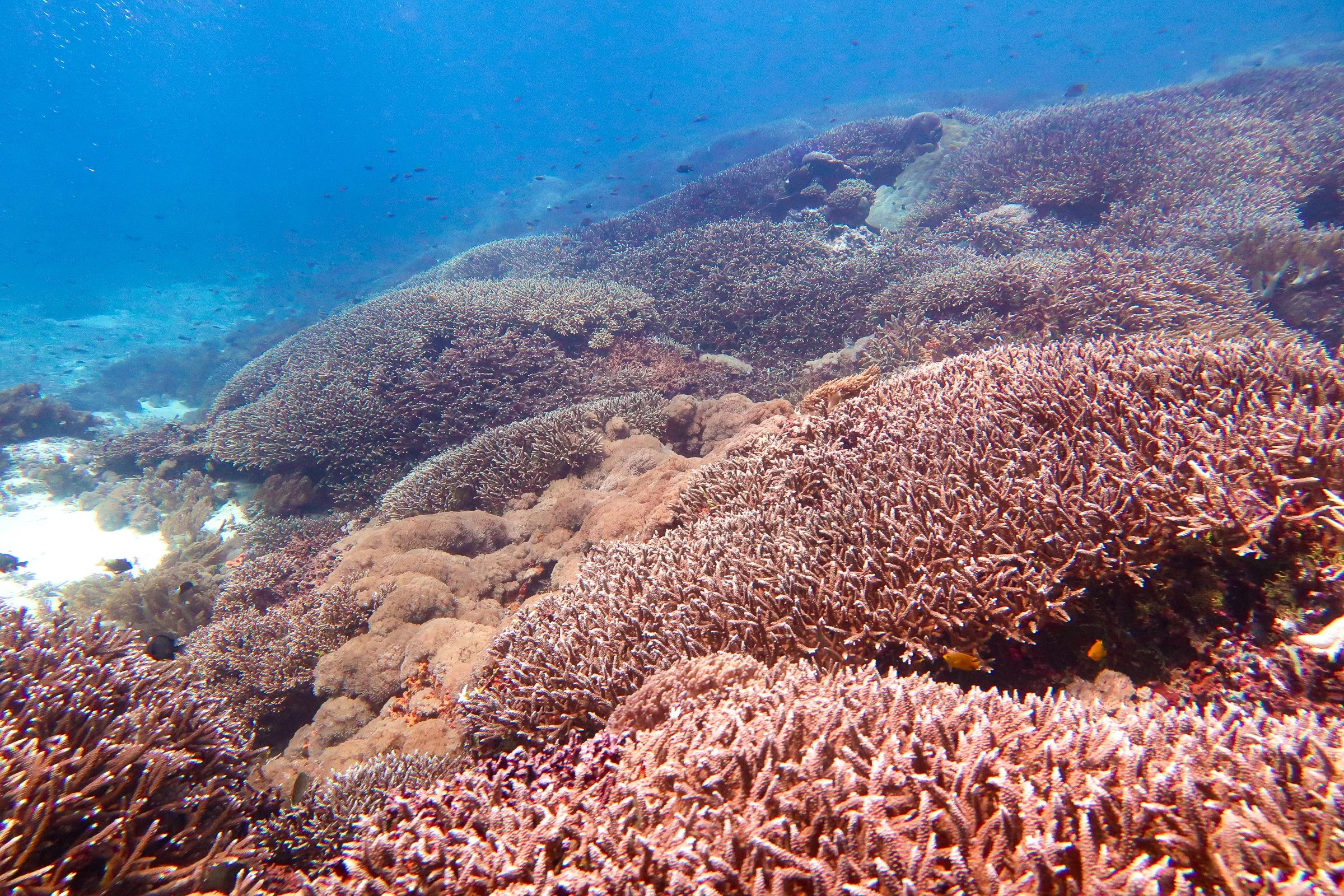
Drop in at Mangrove Reef and the first thing you notice is how much of it is alive. Thickets of branching Acropora roll down the slope, packed so tightly that the water above them is full of small fish. The second thing you notice, usually a minute later, is that you are moving.
These two things are connected. The current at Mangrove Reef is not an obstacle to the reef. It is the reason the reef looks the way it does.
The Science and Data Collection
A Marotte HS tilt current meter sat at about 10 m on the reef across two deployments, 19 April to 16 May and 4 to 21 November 2026. Together they cover a full lunar cycle. The water almost always flows toward the west north west, about 300 degrees, nearly parallel to the beach and the reef edge. Average speed was 0.30 m/s (about 0.6 knots), rising to about 0.65 m/s in short bursts.
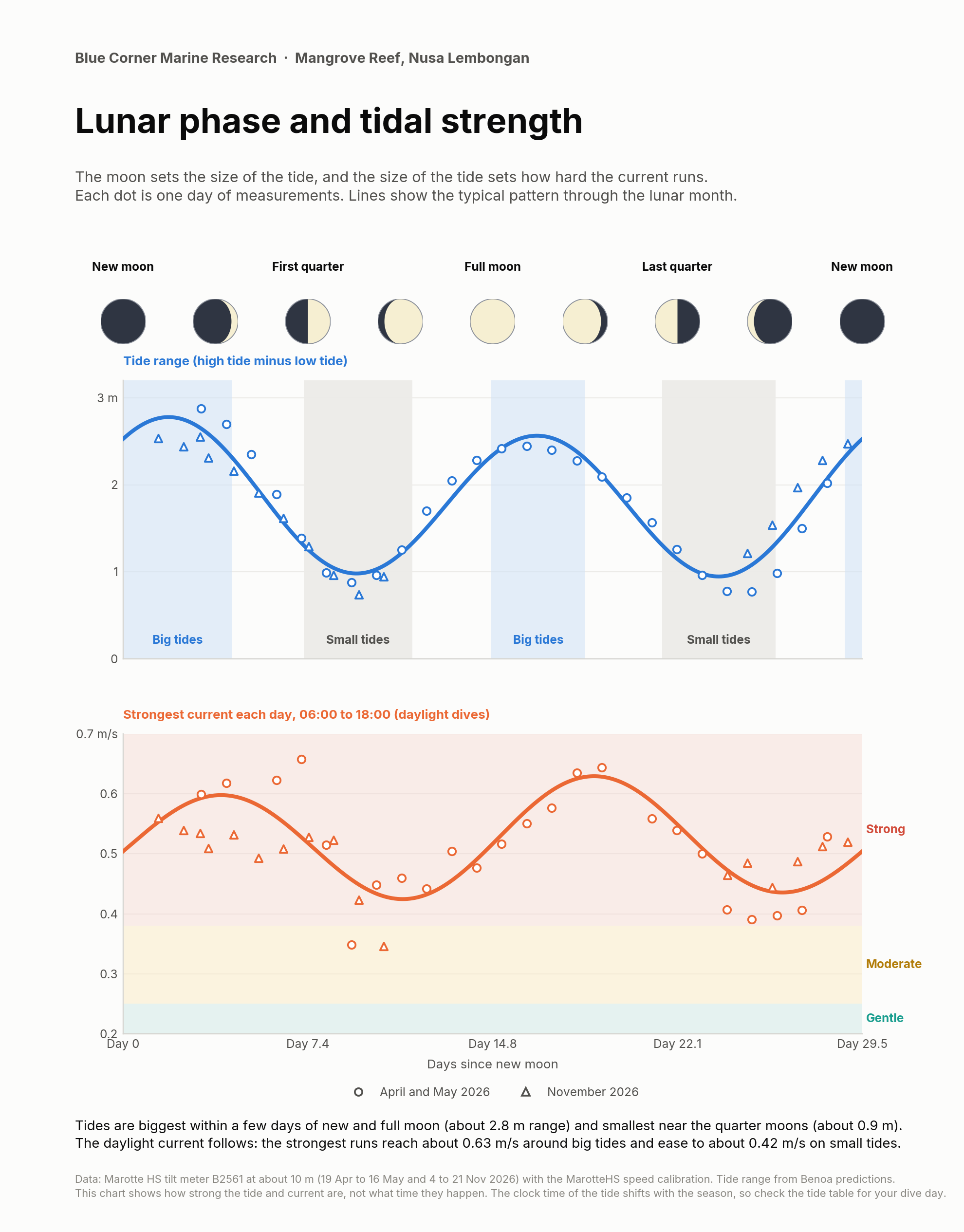
The pattern follows the tide. The strong and gentle bands slide about 50 minutes later each day, and the daily peak follows the size of the tide, so the days around new and full moon bring the strongest water.
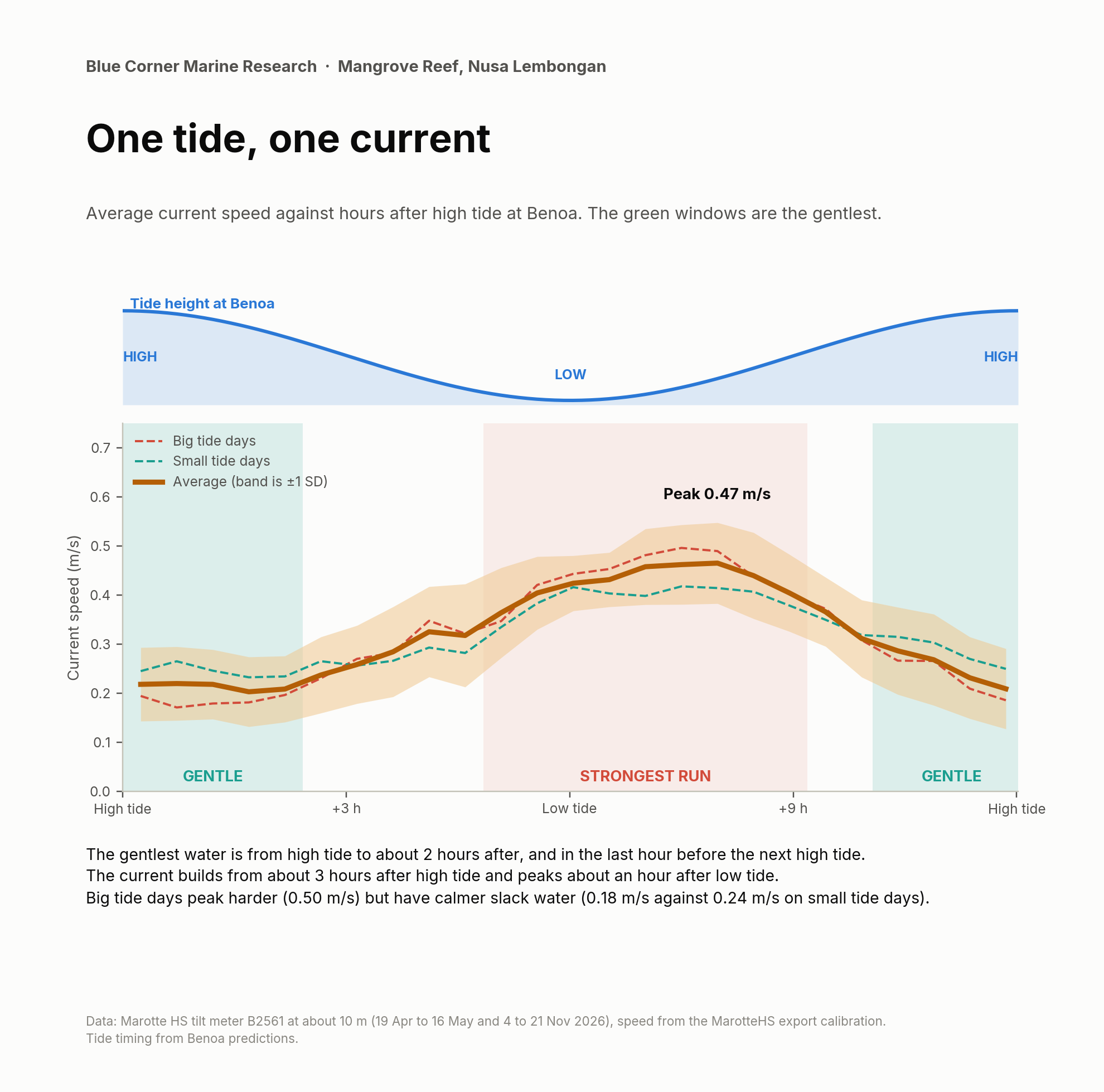
Across one tidal cycle the current is gentlest from high tide to about 2 hours after, builds from about 3 hours after high tide, and peaks at about 0.47 m/s roughly an hour after low tide.
Why moving water makes vibrant coral
This part comes from published research on other reefs, and we are now testing it on ours.
Food delivery. Coral polyps catch plankton as it drifts past, and the amount reaching them depends on how much water passes per second. If plankton concentration stays the same, the peak current at Mangrove Reef (about 0.47 m/s) delivers roughly twice the food per hour that slack water does (about 0.22 m/s).
Gas exchange and waste. Every coral is wrapped in a thin layer of still water. Flow thins that layer, which helps oxygen and nutrients move in and waste move out. Faster flow speeds up this exchange.
Cleaning. Moving water carries sediment off the colonies, so the polyps stay open and the algae inside the coral get their light.
Heat protection. Studies after the 1998 bleaching event found that corals in faster flow survived better, probably because flow carries away the by-products that build up under heat stress (Nakamura and van Woesik, 2001).
Our meter also records temperature, and it adds a hint. Water sat near 29 °C most of the time, with brief cool pulses that dropped as low as about 25 °C in November. These were rare, about 3% of the readings, and tended to arrive when the flow was weaker, so we do not yet know their cause. The Lombok Strait is known for cool water mixing up from the deep. Even short cool pulses can ease heat stress on a reef, which makes them worth watching.
Why the damselfish face into the current
The schools of damselfish hovering over the corals are planktivores. They hold their position facing upstream and pick individual plankton out of the water as it arrives. A faster current delivers more food, so they feed more actively when the water is running, and they stay close to the branches so they can dart into cover.
The relationship benefits the corals too. Studies on branching corals and their resident fish suggest that fish waste can add nutrients and boost coral growth. At Mangrove Reef the current feeds the fish, the fish shelter in the coral, and the coral may benefit from the fish.
The thrill of the drift
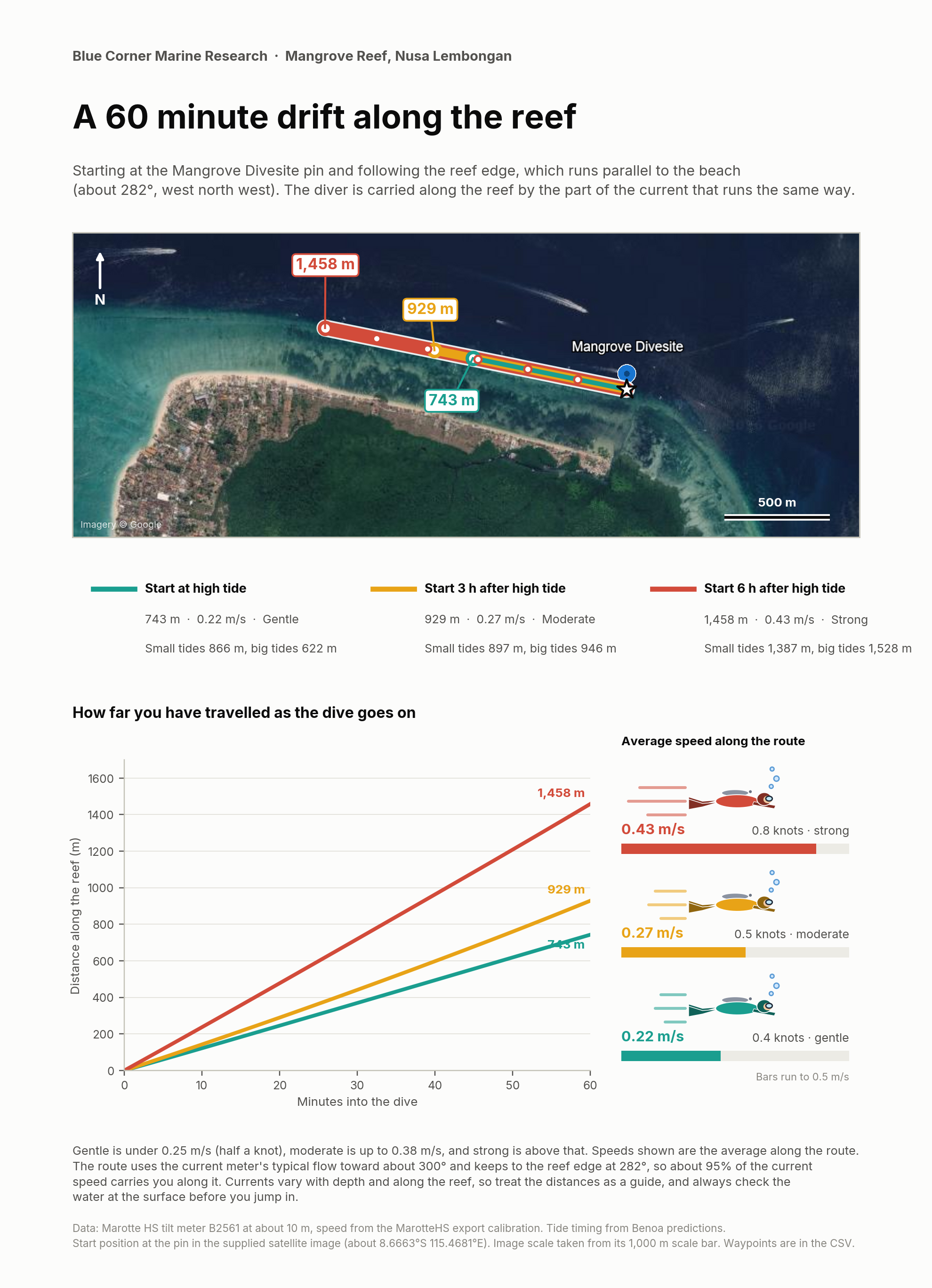
For a diver, the best part of all this is the ride. Starting at the Mangrove Divesite and following the reef edge, we calculated how far you would travel in 60 minutes by drifting with the water.
Start at high tide: about 740 m at a gentle 0.22 m/s. Time to look at the coral.
Start 3 hours after high tide: about 930 m at a moderate 0.27 m/s. A relaxed glide, with good fish action.
Start 6 hours after high tide: about 1,460 m at a strong 0.43 m/s. You will fly along the reef edge.
The moderate window, about 3 to 5 hours after high tide, is the sweet spot for most divers. The current is strong enough to bring the plankton feeders out, but gentle enough to enjoy the reef.
Drift diving well
Stay neutrally buoyant and keep your fins and hands off the coral. Never hook onto live reef.
Dive with a professional guide, stay with your buddy, and carry a surface marker buoy.
Arrange boat pickup well down the reef. A strong start can carry you about 1.5 km in an hour.
Check the water at the surface before you jump in. Real currents vary.
Credits: Andrew Taylor & Blue Corner Marine Research team.